
Gilbert · Dental Care
Choosing Between a Crown and a Filling: A Gilbert Decision Tree
When a tooth needs a restoration, the choice between a filling and a crown is rarely obvious to the patient and occasionally not obvious to the dentist either. Both are appropriate for specific clinical…
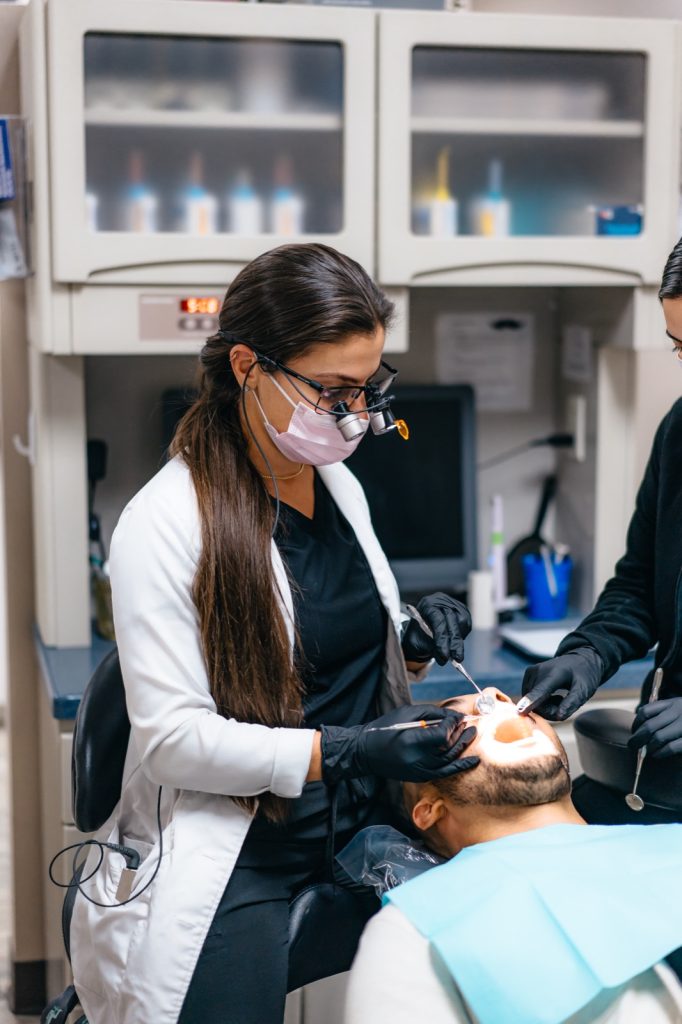
When a tooth needs a restoration, the choice between a filling and a crown is rarely obvious to the patient and occasionally not obvious to the dentist either. Both are appropriate for specific clinical situations; choosing wrong in either direction has real consequences. Here’s how we make the call at our Gilbert practice, with honest explanation of the reasoning so patients can push back if something does not make sense.
What each restoration actually does
A filling (see our fillings page) replaces a specific area of lost or decayed tooth structure. The remaining natural tooth carries most of the chewing load. Appropriate when enough natural tooth structure remains to support chewing function.
A crown (see our crowns page) covers the entire tooth, forming a new chewing surface that carries the full load. Appropriate when not enough natural tooth remains to function on its own or when the remaining tooth is at high risk of fracture. Many appropriate crown cases can also be done as same-day crowns in Gilbert: one visit, no temporary, no second appointment, using in-house milling when the tooth and material are a fit.
The boundary between the two is not a sharp line. It is a gradient based on how much natural tooth is still structurally sound.
The main variable: remaining tooth structure
Rough guideline we use:
- 60%+ of natural tooth structure intact: filling usually appropriate
- 40-60% intact: judgment call, depends on which structure is remaining, bite force, and patient-specific factors
- Under 40% intact: crown usually appropriate
But percentage is not the only factor. Which surfaces remain matters as much as how much.
Factors that push toward a crown
Missing cusps. A cusp is one of the corners of the chewing surface. Teeth are strongest when all cusps are intact and connecting enamel structures are preserved. Once a cusp is gone, the remaining structure is vulnerable to fracture under chewing forces. Crowns replace missing cusps with a material that distributes force like the original cusp would.
Undermined cusps. Cusps that are technically still present but have had their supporting dentin removed by decay or previous restoration. They are cosmetically there but structurally weak. A filling preserves them temporarily; a crown stabilizes them long-term.
Cracks in the tooth. Cracked tooth syndrome (see our chipped and cracked tooth page) is a fracture line that may or may not be visible but causes pain on biting. Fillings cannot stop crack propagation; crowns splint the tooth together and prevent further cracking. Once a structural crack is diagnosed, a crown is usually indicated.
Root canal treated teeth (posterior). Molars and premolars that have had root canals are brittle because the tooth has lost internal structure and moisture. Posterior root-canal-treated teeth without crowns are at higher risk of fracture than those with full coverage. Anterior teeth sometimes get away without crowns after root canal; premolars and molars should typically be crowned.
Very large existing filling that needs replacement. A tooth with a large old filling often has marginal breakdown or decay developing around the filling edges. By the time the old filling is removed and the underlying decay addressed, there is often not enough structure left to support another filling. The replacement is a crown.
Significant bruxism or occlusal forces. Heavy grinders stress their dentition with forces that exceed what standard chewing generates. Patients with diagnosed bruxism (see our night guards page) sometimes need crowns on teeth that might have gotten away with fillings in a non-bruxism patient.
Factors that keep us in filling territory
Small-to-moderate decay on a single surface. The classic occlusal cavity caught at a routine cleaning. Minimal structural compromise. Composite filling, 30-45 minutes.
Intact cusps on all sides. As long as the cavity is bounded by solid tooth structure with no cusp involvement, fillings work well.
Minimal depth. Shallow cavities do not approach the pulp and do not compromise structural integrity substantially.
Anterior teeth with cosmetic rather than structural concerns. Front teeth bear less biomechanical load than back teeth. Larger fillings in front teeth often work well that would have needed crowns on molars. If the tooth is healthy and the question is cosmetic, compare crowns vs veneers before choosing a full-coverage restoration.
Interproximal decay without cusp involvement. Cavities between teeth can be extensive, but if cusps remain intact, they are often fillable without a crown.
Onlays: the middle ground
An onlay covers part of the tooth but not the full chewing surface, replacing one or more cusps while preserving the remaining enamel. It is often a better choice than a full crown when the patient has partially compromised structure but significant sound enamel.
Advantages: preserves more natural tooth than a full crown, stronger than a large filling, durable, excellent aesthetics with modern materials. Indication: mid-range cases between filling and crown territory. For patients with teeth that could go either way, onlays are often our recommendation: middle-ground structural restoration without the tooth reduction of a full crown.
What to ask your dentist
If your dentist recommends a crown and you are not sure it is necessary, reasonable questions:
- What percentage of natural tooth is remaining on this tooth?
- Are all cusps intact, or is one missing or structurally weak?
- Is there a visible crack on transillumination?
- Has this tooth had a root canal?
- Are there any cracks on the radiograph?
- Could an onlay work instead of a full crown?
- What is the prognosis if we do a filling instead? What is the realistic failure timeline?
If the answers are not satisfying, get a second opinion. Dentistry has judgment calls, and different clinicians legitimately reach different conclusions on borderline cases. A second opinion is not an insult. It is good patient due diligence.
What to ask if filling was recommended but the tooth keeps having problems
Sometimes the filling was the right call initially but the tooth has continued to have issues: persistent sensitivity, breaking fillings, food packing, or pain on release after biting. Reasonable to ask:
- Has the remaining tooth structure compromised since the last exam?
- Should we move to a crown or onlay now?
- Is there a crack I should know about?
- Is root canal therapy likely in the future for this tooth?
Sometimes the answer is “yes, it is time for a crown,” which means the original filling bought you service but the tooth has now crossed the threshold.
Cost comparison
At Glisten Dental Studio in Gilbert, a dental crown is $900-$1,500 depending on material. Fillings generally cost less than crowns because they replace less tooth structure and require less laboratory or milling work. Onlays sit in the middle clinically because they preserve more tooth than a crown while adding more strength than a filling.
Insurance typically covers fillings as a basic service and crowns or onlays as a major service, often around 50% for crowns after deductible up to the annual maximum. Waiting periods can apply. The out-of-pocket difference between a filling and a crown can be substantial, which is why the choice deserves careful consideration. For a deeper breakdown, see dental crown cost in Gilbert.
When the wrong choice was made
Two common patterns we encounter from patients who switched to our practice:
Filling placed when a crown was needed. Tooth continues to crack or break. Eventually the patient needs a crown anyway, sometimes a root canal first because the tooth has progressed. The filling cost was effectively wasted.
Crown placed when a filling would have sufficed. More permanent tooth reduction than necessary. Patient invested in a restoration that did not need that level of intervention.
Both happen. We aim for middle-path honesty: recommend the least aggressive restoration that will work, document the reasoning, and follow up if symptoms suggest the original decision needs revisiting.
If the problem is not the original decision but a crown that has come off, cracked, or feels loose, read the broken crown repair guide before chewing on that side. Loose crowns can trap bacteria and make a small problem harder to solve.
Getting an honest evaluation
Call 480-331-4955 for a second opinion or initial evaluation in Gilbert. We will show you the radiograph, the clinical photo if we take one, and walk through the reasoning for our recommendation. If you are more comfortable with the restoration your previous dentist recommended, we will tell you if we agree; if we disagree, we will explain why. The goal is the right restoration for your specific tooth, not defending any particular clinical position.
Call 480-331-4955 to book a consultation, or use the /contact/ page.