
Bonding is the most under-explained option in cosmetic dentistry. Most patients hear about veneers and assume that’s the only fix for a chipped, worn, or oddly-shaped tooth. It isn’t. Bonding does roughly 70% of what veneers do at a quarter of the cost, when it’s the right tool for the job. This page is the honest version of when it is, when it isn’t, and what to expect.
Real Results
Real cosmetic bonding results at Glisten Dental Gilbert
Actual Glisten Dental patients, treated by Dr. Revan Dawood. No stock photos. Each pair is shown at the same scale so you see the true change.
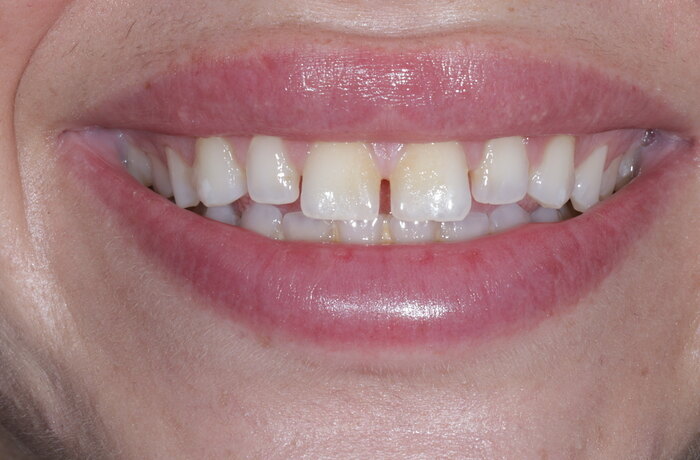 Before
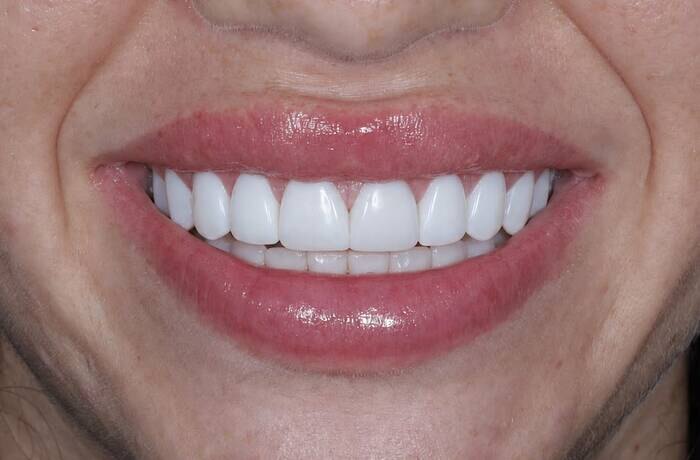 After
After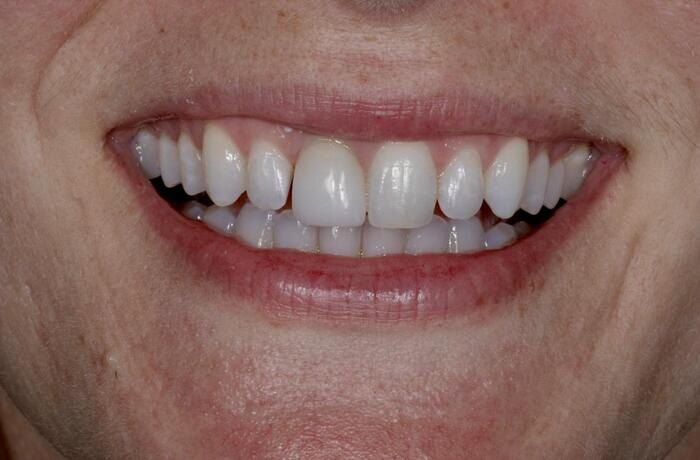 Before
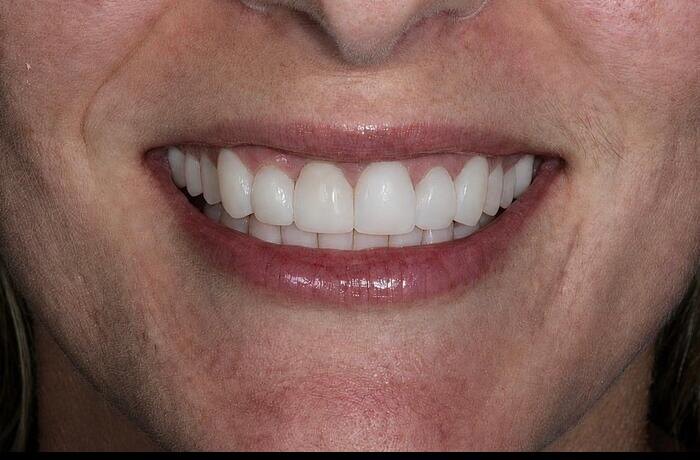 After
After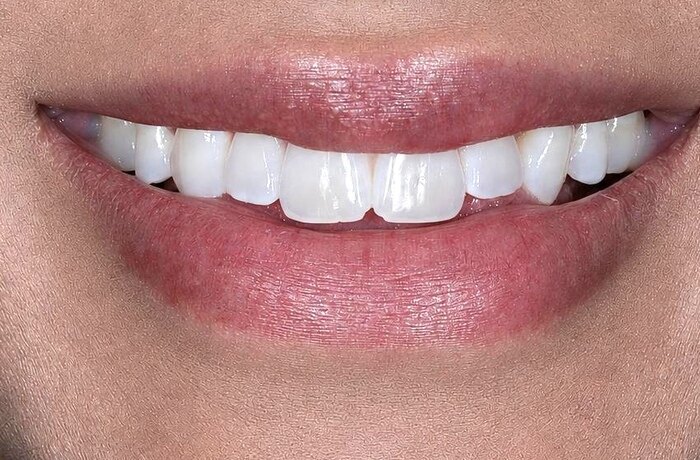 Before
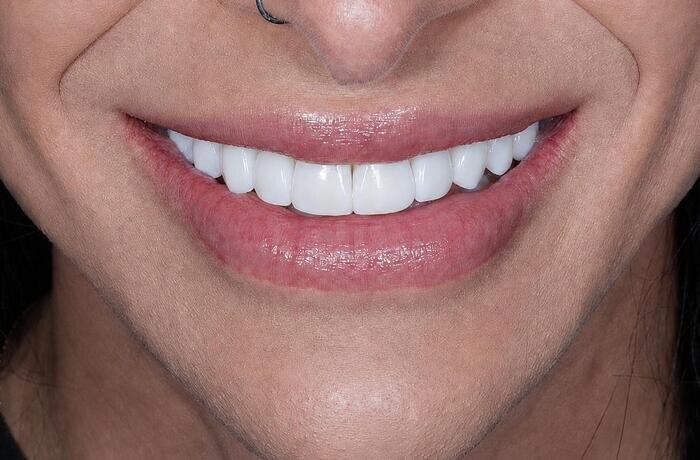 After
After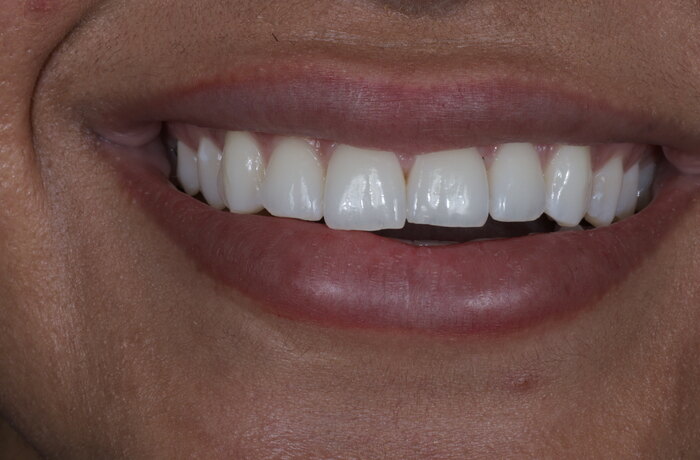 Before
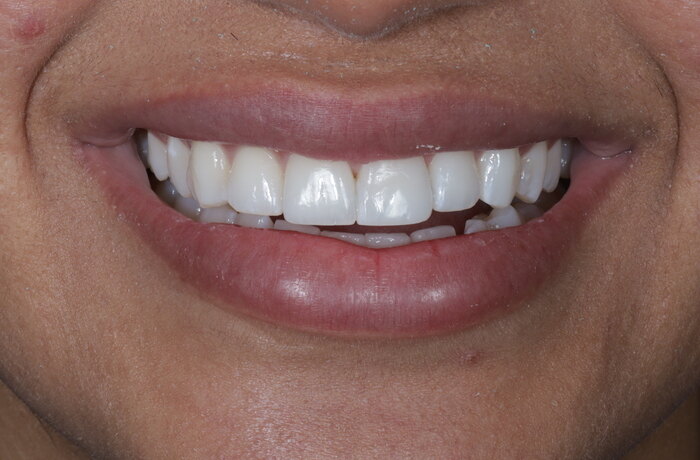 After
AfterResults vary by patient. Photos published with patient consent.
What dental bonding actually is
Dental bonding is composite resin, the same material used in tooth-colored fillings, sculpted onto a tooth, hardened with a UV light, and polished. It’s done freehand, in a single appointment, and almost always without removing any of your natural tooth structure. That last part matters: bonding is fully reversible. If you don’t like it, or want to upgrade to veneers later, the bonding can be removed and your tooth is exactly as it was before.
The trade-off vs porcelain is durability. Composite resin is tough but it’s not as hard as porcelain or natural enamel. Stress, time, and the foods you eat will slowly wear it. A well-done bonding case lasts 5-7 years on average, sometimes longer on front teeth that don’t take heavy bite force. Veneers last 15-20+ years.
When bonding is the right call
- Small chips on front teeth from biting a fork, trauma, or a fall. Bonding rebuilds the missing edge in 30 minutes.
- Closing small gaps (diastema) between front teeth when the gap is under 2mm. Bonding adds material to the adjacent teeth to close the space.
- Worn edges on front teeth from years of grinding, where the patient wants a longer, more youthful tooth shape restored. (We’ll also fit you for a night guard so the new bonding doesn’t wear right back down.)
- Reshaping a single oddly-shaped tooth, pointed canine, peg lateral, slightly rotated tooth, without committing to a veneer.
- Correcting color on one tooth that’s discolored from a prior root canal, internal staining, or a developmental defect. Whitening doesn’t work on a single dead tooth; bonding does.
- Patients who want a cosmetic improvement but aren’t ready for irreversible work. Bonding lets you try a smile change first. If you love it after a year, you can upgrade to veneers.
When bonding isn’t the right call
- Severe enamel wear from bruxism across many teeth. Bonding will wear back down within 2-3 years if the underlying grinding isn’t addressed first. These cases need a more durable restoration plus a night guard.
- Large fractures involving more than half the crown of a tooth. The bonded repair won’t have enough sound tooth to bond to and will fail under bite force. These need a crown.
- Full smile transformation: 6-8 front teeth completely reshaped, lengthened, and color-changed. Veneers give a more uniform, longer-lasting result for full-arch cases.
- Heavy posterior bite force. Bonding back molars for chewing function rarely lasts. Inlays, onlays, or crowns are the right tool there.
- Heavy coffee, tea, red wine, or tobacco use without a willingness to maintain. Composite picks up surface stain over time and you’ll need touch-up polishing every 1-2 years to keep the brightness.
What happens during a bonding appointment
- Shade match. Dr. Dawood selects a composite shade that matches your adjacent teeth in natural light, not just under the operatory lamp.
- Surface preparation. A mildly acidic etch is applied for 15 seconds to create microscopic texture on the enamel. This is what the composite bonds to. Then a thin primer.
- Layered application. Composite is sculpted in thin layers (under 2mm each), each cured with a UV light for 20 seconds before the next layer goes on. Multi-layered application is what produces a natural-looking result instead of a flat opaque patch.
- Sculpting. Final contour is shaped with hand instruments to match the curvature of your other teeth, line angles, edges, and surface texture.
- Polishing. A series of progressively finer disks and pastes brings the surface to a high gloss matching enamel.
- Bite check. Articulating paper marks any high spots; we adjust until your bite feels even.
Single-tooth case: 30-60 minutes total. Multi-tooth smile case (4-6 teeth): 90 minutes to 2 hours. No anesthesia is needed for most cosmetic bonding cases. There’s no drilling and no tooth structure removed.
Bonding vs porcelain veneers
The most common question we hear. The honest comparison:
- Cost. Bonding $650-$850 per tooth. Veneers $1,400-$2,200 per tooth. A 6-tooth smile is $3,900-$5,100 in bonding vs $8,400-$13,200 in veneers.
- Lifespan. Bonding 5-7 years; veneers 15-20+ years. On a per-year basis, veneers are sometimes cheaper long-term, but bonding lets you spread the spend.
- Reversibility. Bonding is reversible (no enamel removed). Veneers are not (we shave off ~0.5mm of enamel to seat the porcelain).
- Stain resistance. Veneers don’t stain. Bonding picks up stain like natural teeth and needs occasional polishing.
- Strength. Veneers are noticeably stronger and handle heavy biting better.
- Time. Bonding is one visit. Veneers are typically two visits over 3 weeks while the lab fabricates the porcelain.
- Aesthetics. A great bonding case looks excellent up close. A great veneer case looks excellent up close and photographs better under bright light. The difference is real but smaller than most patients expect.
If you’re 25 and haven’t decided what you want for the next 30 years, bonding first then veneers later is a reasonable path. If you’re 50 and you know you want the long-lasting fix, veneers in one shot is usually the better spend.
Lifespan and maintenance
Bonded teeth are cared for the same as natural teeth: brush twice a day, floss daily, regular cleanings every 6 months. The specifics that affect bonding longevity:
- Don’t bite hard objects. Pens, fingernails, ice cubes, popcorn kernels. Bonding chips when stressed at an edge.
- Wear a night guard if you grind. Bruxism is the #1 cause of premature bonding failure.
- Limit chronic stain sources. Daily coffee, red wine, smoking. If you can’t quit, plan on annual polishing.
- Touch-ups. Most bonding cases need one polish every 1-2 years to maintain brightness and surface texture. Touch-ups are typically $40-$80 per tooth.
- Replacement. When the bonding has worn or stained beyond polishing, the old composite is removed and re-bonded, same procedure as the original, same price range.
Why patients choose Glisten
All your dental work, in one place
Our small team of multi-specialty dentists handles implants, restorative, cosmetic, and orthodontics, so you're not being passed between three different offices to finish your work.
We advocate with your insurance
We file claims directly and follow up with your insurance company on your behalf to help cover what they should, instead of leaving the paperwork to you.
Honest, no-pressure plans
We recommend only what's actually necessary. Your treatment plan is written so you can take it anywhere for a second opinion, no hard sell, no over-diagnosis.