
Gilbert · Dental Care
Invisalign vs Clear Aligners: A Gilbert Dentist’s Honest Comparison
Clear aligner therapy has exploded over the last five years. Between Invisalign, SmileDirectClub (now defunct but still affecting the market), Byte, Candid, and a half-dozen other brands, patients in Gilbert have more options than…
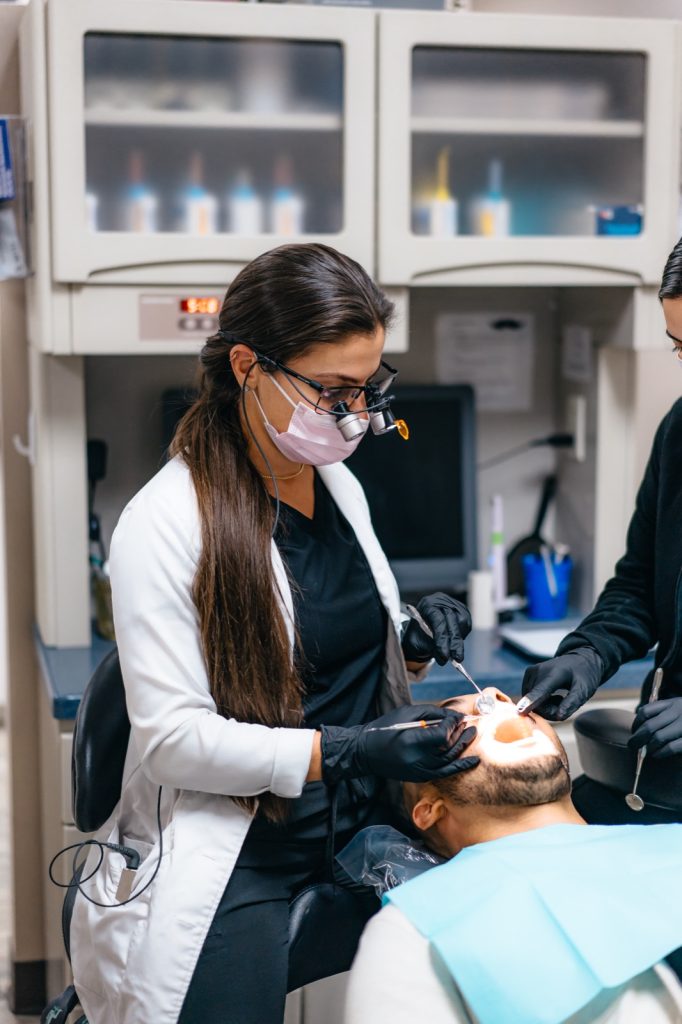
Clear aligner therapy has exploded over the last five years. Between Invisalign, SmileDirectClub (now defunct but still affecting the market), Byte, Candid, and a half-dozen other brands, patients in Gilbert have more options than ever, and more confusion about which one is actually right for them. Here’s an honest comparison from a dentist who places both Invisalign and works with patients whose at-home aligner treatment didn’t work out.
Provider-delivered against mail-order at a glance
| Invisalign with a dentist | Mail-order aligners | |
|---|---|---|
| Who plans it | A licensed provider, in person, from 3D scans, X-rays and a bite exam | Reviewed remotely from a self-taken impression or a store scan. You never meet the provider |
| Clinical exam first | Yes. Gum disease, cavities and cracked teeth are caught before force is applied | No in-person exam |
| Check-ins | Every 6 to 10 weeks for progress, refinement scans and adjustments | Remote only |
| Complex movement | Bonded attachments allow rotations and intrusions flat aligners cannot do | Generally limited to visible front-tooth alignment |
| Treatment time | 6 to 18 months in Gilbert | Varies by brand |
| Cost | $4,500-$6,500 at Glisten Dental Studio, depending on complexity | Roughly $1,900-$2,500 |
What Invisalign is
Invisalign is a brand of clear aligner therapy manufactured by Align Technology and delivered through licensed dental providers (general dentists and orthodontists). The patient’s treatment is planned in-office by a provider who takes 3D scans, reviews X-rays, examines bite mechanics, and designs the tooth movement sequence together with Align’s software. The patient sees the provider every 6-10 weeks for progress checks, refinement scans, and adjustments.
The aligners themselves are made from a patented multilayer plastic (SmartTrack) that applies more controlled force than generic aligner plastics. Small tooth-colored attachments (bumps) are bonded to specific teeth to create grip points for complex movements, particularly rotations, extrusions, and intrusions that flat aligners can’t accomplish.
Typical Invisalign treatment in Gilbert runs 6-18 months. Cost at Glisten Dental Studio: $4,500-$6,500 depending on case complexity.
What “at-home” or “mail-order” clear aligners are
Several companies, Byte, Candid, previously SmileDirectClub, ship aligners directly to the patient after a self-taken impression or an in-store scan. Treatment is overseen remotely by a dentist or orthodontist who the patient never meets in person. Cost ranges $1,900-$2,500, making it roughly half the price of provider-delivered clear aligners.
The appeal is obvious: lower price, no appointments, no waiting room time. The problem is that orthodontics is not a one-size-fits-all discipline, and the absence of in-person clinical oversight causes problems that don’t show up until treatment is partway through or already complete.
Where at-home aligners fail
We see patients in Gilbert regularly who started mail-order aligner treatment and then came in for rescue work. The common failure modes:
1. No clinical exam before treatment. Untreated gum disease, active cavities, or compromised tooth roots aren’t caught. Applying orthodontic force to a tooth with periodontal disease accelerates bone loss. Applying force to an undiagnosed cracked tooth can split it. A dentist’s clinical exam catches this; a photo-based remote review doesn’t.
2. Incomplete treatment planning. Many at-home programs only correct visible front-tooth misalignment and ignore the underlying bite. You can end up with straight-looking front teeth and a worse bite than you started with, which causes jaw pain, premature tooth wear, and sometimes the front teeth relapsing because the bite instability pushes them back.
3. No attachments, no IPR. Complex movements (rotating canines, closing gaps from missing teeth, correcting crowding that needs interproximal reduction to create space) often require attachments and IPR that at-home aligners don’t offer. Cases that need those interventions either under-correct or fail entirely.
4. No monitoring. When treatment goes off-track, an aligner doesn’t fit, a tooth isn’t tracking, a rubber band breaks, a mail-order program has no way to catch it early. By the time the patient realizes something’s wrong, compensations have built up that may require restarting from a new scan.
The result: the industry data on at-home aligner outcomes is mixed at best. Mild cases often finish reasonably. Moderate-to-complex cases often don’t. The patient is stuck with a half-done treatment, a refund request that may or may not succeed, and a dentist visit to figure out what to do next.
When at-home aligners are genuinely fine
Very mild crowding or spacing on front teeth only, no bite issues, healthy gums and teeth, patient understands that results will be cosmetic-level rather than orthodontically-complete. In that narrow slice of cases, at-home aligners often work acceptably for patients with a strong cost motivation. Anyone outside that slice should see an in-person provider.
Who should consider Invisalign at a local Gilbert practice
- Moderate-to-complex crowding or spacing
- Bite correction needed (overbite, underbite, crossbite, open bite)
- Gaps from prior extractions that need closing or preservation
- Prior orthodontic relapse after traditional braces
- Periodontal maintenance patients (careful coordination with hygiene needs)
- Patients with prior cracked teeth, large fillings, or crowns (careful force planning required)
- Teens whose compliance needs in-person accountability
What the Invisalign process looks like at our Gilbert practice
- Free consultation. Clinical exam, photos, and an honest conversation about whether you’re a candidate and what the realistic treatment outcome will be. If you’re not a good Invisalign candidate, we’ll tell you and refer to traditional braces or an orthodontist.
- 3D scan and records. Digital scan of both arches, bite registration, panoramic X-ray, additional radiographs as clinically needed.
- Treatment planning. ClinCheck software simulation is reviewed and adjusted by Dr. Dawood. You see the predicted outcome in 3D before aligners are ordered.
- Aligner delivery and attachments. 2-3 weeks after records. Attachments bonded to specific teeth, first aligner seated, wear schedule reviewed. 22 hours per day, change every 1-2 weeks per protocol.
- Progress visits. Every 6-10 weeks to check tracking, refine attachments, hand over the next set of aligners. Quick visits, usually under 20 minutes.
- Refinements. Most cases need 1-2 refinement phases after the primary aligners to finalize detail movements. Included in the treatment cost at Glisten Dental Studio.
- Retention. Custom clear retainers upon completion, worn nightly indefinitely. Relapse is guaranteed without retention; every tooth you move wants to move back.
What Invisalign costs in Gilbert
At Glisten Dental Studio: $4,500-$6,500 depending on case complexity. Simpler cases (mild crowding, cosmetic alignment of front teeth, short treatment times) are at the lower end. Complex cases (full bite correction, moderate-to-severe crowding, long treatment with multiple refinements) are at the upper end.
Most dental insurance plans that include orthodontic benefits cover Invisalign at the same rate as traditional braces, typically 50% up to a lifetime orthodontic maximum of $1,500-$2,500. In-office financing through CareCredit or flexible payment plans make the out-of-pocket spread across 18-24 months manageable for most patients.
Honest take
If your case is complex enough that you’re unsure whether at-home aligners will work, they probably won’t, and spending $2,000 to find out is a more expensive lesson than spending $4,500 to get it right the first time. If your case is simple enough that at-home aligners might work, a free in-person consultation at a local Gilbert practice will tell you that honestly, and we’ll sometimes recommend the less expensive option if it genuinely fits your situation.
Call 480-331-4955 for a consultation. We’ll give you a straight answer about what’s actually going to work for your specific teeth.
If you are weighing your options, start with our Invisalign treatment in Gilbert page for pricing and what the process looks like here.