
Gilbert · Dental Care
Invisalign for Adults in Gilbert: What to Expect at 30, 40, 50
Adult Invisalign patients have different priorities than teenagers. You're not worried about prom photos or peer judgment; you're worried about discreet treatment that fits around work, aligning teeth that have drifted after years, or…
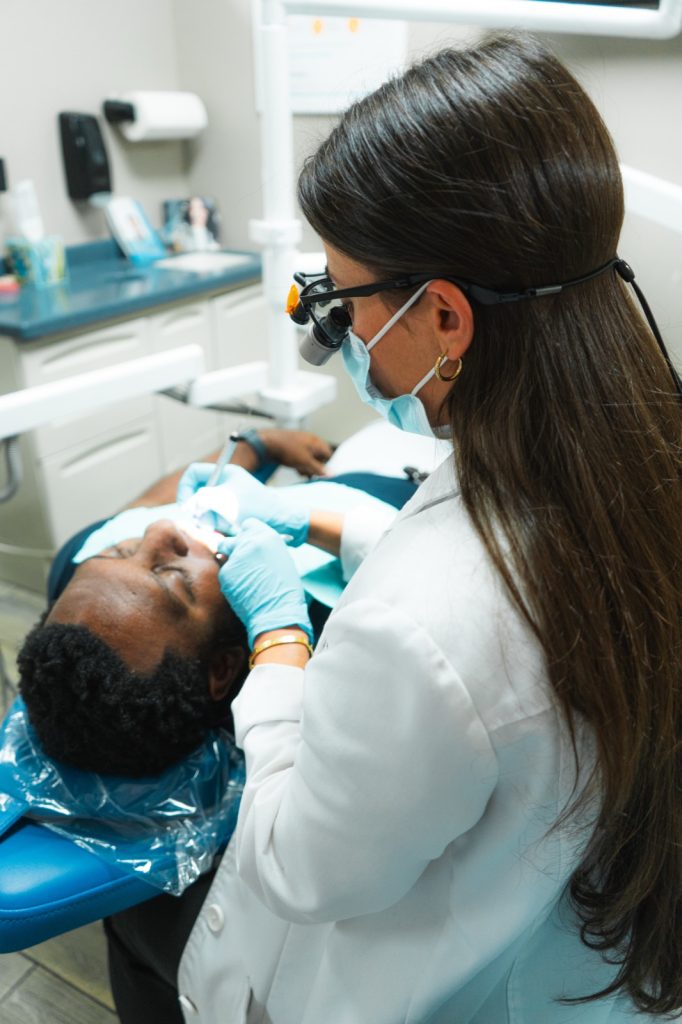
Adult Invisalign patients have different priorities than teenagers. You’re not worried about prom photos or peer judgment; you’re worried about discreet treatment that fits around work, aligning teeth that have drifted after years, or addressing problems that went untreated in your youth because orthodontics wasn’t affordable then. Here’s what adult Invisalign at our Gilbert practice looks like at 30, 40, 50, the realistic expectations for each decade.
Adult orthodontics is the fastest-growing segment
Over the past decade, adult orthodontic treatment has roughly doubled in the U.S. Reasons: better aesthetic options (Invisalign wasn’t around 25 years ago), cultural shift toward cosmetic investment across adult life, and recognition that orthodontic treatment produces functional benefits (bite correction, easier cleaning, reduced periodontal risk) beyond cosmetics.
Approximately 30% of Invisalign patients at our Gilbert practice are over 40. It’s a normal, mainstream treatment choice for adults now, not the novelty it was in 2010.
What’s different about adult teeth
Five factors shape adult Invisalign treatment differently from adolescent treatment:
Slower bone remodeling. Adult bone remodels more slowly than adolescent bone. Orthodontic movements that might take 6 months in a 15-year-old can take 9-12 months in a 45-year-old. Most Invisalign treatments extend modestly in adults but still complete in the 12-18 month range for typical cases.
Existing dental work. Adults often have fillings, crowns, bridges, or implants. Crowns and bridges can be moved orthodontically with planning; implants cannot be moved but can serve as anchors for other tooth movement. Treatment planning accounts for existing restorations in a way that pediatric planning doesn’t need to.
Periodontal considerations. Adults with a history of periodontitis (see our gum disease guide) need careful force management. Excessive orthodontic force on teeth with reduced bone support can accelerate attachment loss. We coordinate with periodontal therapy and sometimes sequence periodontal treatment before orthodontic movement.
Root resorption risk. Slightly higher in adults than in adolescents, though generally mild. Monitored with periodic imaging during treatment.
Aesthetic expectations. Adult patients often want “what I would have looked like as a teen with perfect teeth”, which is sometimes achievable and sometimes not. Honest expectation-setting matters. Orthodontics can straighten teeth but can’t reverse 25 years of enamel wear or change tooth proportions significantly without restorative work.
Invisalign at 30: typically straightforward
Patients in their 30s often present with mild-to-moderate crowding that returned after adolescent orthodontic treatment (relapse from not wearing retainers), mild spacing issues that were never corrected, or cosmetic concerns about front teeth alignment.
Typical treatment length: 9-15 months. Usually a single phase of aligners with 1-2 refinement stages. Most cases fit the Invisalign Comprehensive framework. Treatment cost at Glisten Dental Studio in Gilbert: $3,800-$6,000. Compliance is generally excellent. Patients at this age appreciate the investment and follow the 22-hour wear protocol.
Post-treatment concerns: most 30-year-olds maintain retention with nightly retainer wear and hold their results indefinitely. The biggest risk is lapse in retention when life gets busy. A nightly retainer routine started at 32 is easier to maintain for decades than one started at 55.
Invisalign at 40: more complexity
Patients in their 40s present with a wider range of situations. Common patterns:
Cumulative drift. Teeth shift over decades. Patients who had orthodontic treatment at 14 but didn’t maintain retention often have moderate crowding by 40. A second round of orthodontic correction works well.
Bite collapse from tooth loss. Missing a molar or two leads to neighboring teeth drifting into the space and opposing teeth over-erupting. Invisalign can re-upright and re-position these teeth, often as preparation for implant placement in the missing tooth space.
Preparing for restorative work. Patients needing crowns, bridges, or implants sometimes benefit from Invisalign first to position teeth optimally before the restorative work. Better bite, better aesthetics, better long-term restoration prognosis.
Combined treatment. Invisalign plus whitening, Invisalign plus veneers on specific teeth, Invisalign plus limited crown work, common combinations in this age group.
Typical treatment length: 12-18 months. More refinements often needed (2-3 phases) due to bite complexity. Cost: $4,500-$6,500.
Invisalign at 50: specific considerations
Patients in their 50s frequently have:
Periodontal history. Even controlled periodontal disease changes force management. We measure bone support on every tooth and limit force magnitude accordingly. Sometimes sequence periodontal therapy first, then orthodontics, then ongoing periodontal maintenance.
Multiple existing restorations. Old crowns, bridges, and fillings affect tooth movement. Some restorations need replacement after orthodontic treatment because the bite changes shift contact points.
Cosmetic priorities. Often the driver, wanting a brighter, straighter smile for the next 20-30 years of life. Reasonable and achievable with realistic expectations about what aligners accomplish (straightening) vs what restorative work accomplishes (color, shape, proportion).
Slower biological response. Treatment typically extends 15-24 months for comprehensive cases. Faster approaches are sometimes tempting but produce worse tracking and require more refinements.
Cost at this complexity level: $4,800-$7,500 depending on scope. Retention compliance is actually better in this age group. Patients appreciate the investment and the prospect of redoing orthodontics again at 70 provides strong motivation for nightly retainer wear.
Invisalign at 60+: yes, still a reasonable option
Plenty of our Gilbert Invisalign patients are over 60. Considerations:
- Bone support must be documented adequate on every tooth, sometimes refined via CBCT imaging
- Periodontal health must be stable before starting
- Treatment length longer (often 18-24 months for comprehensive cases)
- Results are just as achievable aesthetically as in younger patients
- Retention is lifelong, same as at 30
The main limiting factors are health-related rather than age-related. A healthy 65-year-old with good bone support is often a better candidate than a 35-year-old with untreated periodontitis.
Common questions from adult patients
Will Invisalign hurt more at my age? Not noticeably. Mild pressure and tenderness for 2-3 days after each new aligner, manageable with OTC ibuprofen. Adult patients sometimes describe the first few aligners as more uncomfortable than expected, then habituation, same pattern as adolescents.
Can I have Invisalign if I’ve had braces before? Yes. Retreatment of orthodontic relapse is a very common adult case. Typically shorter treatment than the original braces since you’re refining rather than building from scratch.
Will Invisalign affect my speech? Mild lisp for the first 3-5 days with new aligners, resolving quickly as your tongue adapts. Most patients with speaking-heavy jobs (attorneys, sales, teachers, podcasters) report negligible impact after the initial adaptation.
How much time commitment is involved? 22 hours per day of aligner wear, ~10 minutes of daily cleaning routine. Office visits every 6-10 weeks for 15-20 minutes each. Total clinical time across a 15-month treatment: 3-4 hours. Less than many adult patients anticipate.
Can I do Invisalign while traveling for work? Yes. Most adult patients with heavy travel schedules. Carry your current and next-up aligners with you, maintain the 22-hour rule, come back for progress visits on your home schedule. The travel-friendly nature is one of Invisalign’s substantial advantages over braces.
Does insurance cover it? Adult orthodontic coverage varies more than pediatric. Some dental PPO plans cover adult ortho at 50% up to lifetime max ($1,500-$2,500); many don’t cover adult ortho at all. We verify your specific benefits. HSA and FSA dollars can be used for orthodontic treatment.
Scheduling your consultation
Call 480-331-4955 for an Invisalign consultation at Glisten Dental Studio. The initial visit is complimentary and includes intraoral scanning, treatment simulation, honest assessment of whether Invisalign is the right approach for your specific case, and a written treatment plan with cost breakdown. No pressure, no upsell, straight evaluation.
For the full clinical comparison see our Invisalign complete guide.
Full treatment details, honest pricing, and the cost-vs-braces conversation live on our Invisalign clear aligners in Gilbert page.