
Gilbert · Dental Care
Invisalign in Gilbert AZ: Why Local Families Are Choosing Clear Aligners Over Braces
Thinking about Invisalign in Gilbert, AZ? Here's what families near San Tan Village actually need to know, cost, timelines, and when braces make more sense.
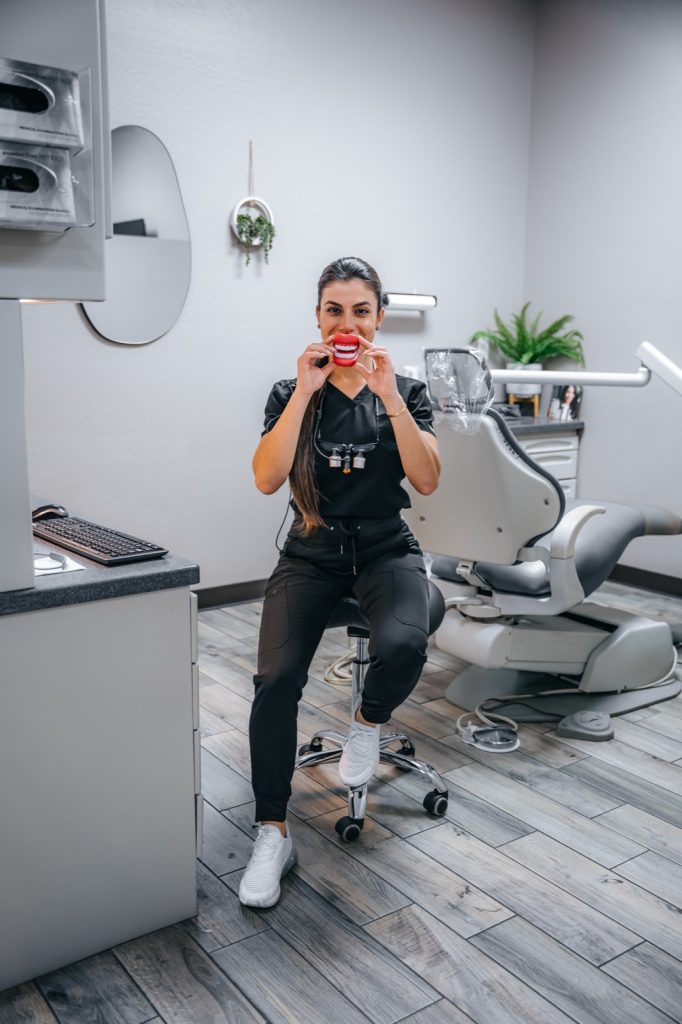
A parent came in a few months ago with her teenager. They’d just moved to Gilbert from out of state, settled in near San Tan Village, and wanted to know one thing: “Can we skip the metal braces?” Her son played travel baseball. Braces and a fastball to the mouth felt like a bad combination.
The short answer was yes, clear aligners were the right call for him. But “clear aligners are fine for everyone” is not the right answer, and I want to give you the real version of this conversation, the same one I have with families who walk in from all over Gilbert, from the Heritage District to the neighborhoods near Crossroads Park.
How Much Does Invisalign Cost in Gilbert, AZ?
Our Invisalign range at Glisten Dental Studio is **$4,500-$6,500 depending on complexity**. That number moves based on how much tooth movement is actually needed, not based on how many aligners get made. A minor crowding case and a full-arch correction with bite adjustment are priced differently because they require different levels of planning and oversight.
I always walk through it line by line. We pull up insurance benefits together, I show exactly what’s covered, and we look at real out-of-pocket numbers before anything is scheduled. No surprises. If the cost feels like a wall, we have financing options and we’ll figure it out together.
A few things to watch for when comparing quotes around the Gilbert area: ask whether attachments, refinements, and retainers are included. Some offices quote a low entry number and bill separately for every additional step. I’d rather give you the full picture upfront.
Invisalign vs. Braces: When Clear Aligners Are the Better Choice (and When They’re Not)
I’ll be honest about this because I think it matters more than the sales pitch. Clear aligners work extremely well for mild to moderate crowding, spacing, and certain bite issues. Most of our patients finish between four and seven months. If someone has minor crowding, they might be done in six to twelve months. Complex cases can push past twelve. I give a realistic range at the first scan, not a number from a brochure.
Where clear aligners have limits: severe rotations, significant vertical movement, and certain bite corrections. It’s possible to address those cases with aligners, but it takes considerably longer and the result may still fall short of what braces would deliver. I’d rather tell someone that honestly upfront than have them go through a full clear aligner treatment and still not love the outcome. There are cases where braces are genuinely the better clinical choice, and I’ll say that plainly even knowing it’s not what someone came in hoping to hear.
For the baseball player I mentioned, his case was straightforward crowding, no significant bite issues. Clear aligners were the right call. That’s the kind of assessment I make for every patient before recommending anything.
What Is the 30-Minute Rule With Invisalign?
This comes up a lot, and it’s worth clarifying. The “30-minute rule” refers to waiting 30 minutes after eating or drinking anything acidic or sugary before putting your aligners back in. The reasoning is that enamel is temporarily softened after acid exposure, and trapping aligners against softened enamel right away can increase wear.
My compliance instructions are simple: wear them 22 hours a day. Every hour you skip adds time to your treatment. Take them out to eat and drink anything except plain water. Rinse your mouth before putting them back in. And don’t lose your aligners, I say that with love, because it happens more than people expect and a replacement tray adds a delay to the whole timeline.
The patients who finish on schedule are almost always the ones who treat the 22-hour rule like it’s non-negotiable. The ones who push past 14 days on a tray because “it felt like it wasn’t tracking yet” are usually the ones calling me at month eight wondering why they’re not done.
Can Invisalign Fix TMJ Issues?
This is a nuanced question and I want to give you an honest answer rather than a marketing one. Misaligned teeth can contribute to jaw strain and certain bite-related discomfort. Correcting that alignment, whether through clear aligners or braces, sometimes reduces those symptoms over time.
What clear aligners are not is a dedicated TMJ treatment. If someone is coming to me primarily because their jaw clicks, locks, or causes significant pain, that needs a proper TMJ evaluation before we talk about orthodontic movement. Moving teeth in the presence of an active, unaddressed TMJ problem can sometimes make things worse, not better. I take a complete clinical picture before recommending any tooth movement, and that includes asking about jaw symptoms.
If alignment correction is part of the right path forward for someone dealing with mild jaw discomfort tied to bite issues, we can discuss that. But I won’t use “Invisalign fixes TMJ” as a selling point because it’s not that straightforward.
Can I Get Braces (or Invisalign) If I Have Osteoporosis?
This comes up more than people expect, especially with patients who are a bit older and thinking about straightening teeth they’ve lived with for decades. Osteoporosis affects bone density, and tooth movement, whether from braces or clear aligners, depends on bone remodeling around the roots.
What I do before any orthodontic case, including Invisalign, is a thorough medical history review. Certain medications used to treat osteoporosis, particularly bisphosphonates, can affect how bone responds to tooth movement and may complicate any oral surgical procedure. If implants are part of a broader treatment plan, for example, someone also considering [same day dental implants in Gilbert](https://glistendentalstudio.com/same-day-dental-implants-gilbert-what-to-expect-day-one/), that medication history matters even more.
Osteoporosis does not automatically disqualify someone from orthodontic treatment. But it requires a careful medical review, a conversation with the prescribing physician when indicated, and realistic expectations about timing. I have that conversation with every patient before we start. Most people are candidates for more than they expect, they just need someone to actually look at the full picture.
One More Thing Worth Knowing
On weekends, families from all around Gilbert, near Gilbert Regional Park, down toward the Heritage District, come in for consultations with teenagers and adults who’ve been putting this off for years. The most common thing I hear is “I didn’t think I was a candidate” or “I thought it would be too complicated.”
The first scan is easy. We get a full picture of what’s actually happening, I give a real range and timeline based on that specific case, and we go from there. No pressure, no vague brochure numbers.
If you’ve been going back and forth on clear aligners, call us and come in. I’ll tell you exactly what I’d recommend and exactly why, the same way I’d want someone to talk to me.